
Your location pages look identical. Your rankings reflect that.
A pin on a map and a templated page aren't a local SEO strategy. CyberMark builds a unique search presence for each franchise location — content, technical foundations, and measurement, market by market.
Three verticals. Three local search problems solved.
Each entry below is an actual CyberMark client program. Select one to see the situation observed, the work done, and the result measured.
14 markets opening over 18 months. Every location page shared the same template copy — different city name, identical content. Search engines treated each page as a duplicate. Organic traffic was near zero at launch.
CyberMark built unique location pages for every Slick City market — original content referencing local schools, competing venues, and neighborhood context; city-specific keyword maps; LocalBusiness schema per location synced to each GBP.
Organic traffic growth across Slick City locations · 18-month program · Measured by Google Analytics organic sessions across all location pages

Slick City Action Park · Garland, TX location page · brandVANTAGE + CyberMark local SEO
Individual cafe franchise owners had no visibility into their location's search performance. Corporate couldn't confirm which pages ranked, which had errors, or which markets were leaving organic traffic unrealized.
CyberMark audited every Just Love Coffee location page, corrected technical SEO issues, rewrote location content for market specificity, and established reporting that tied organic sessions to individual locations — giving corporate and franchisees a shared view.
Local search visibility increase across the Just Love Coffee network · Measured by organic search sessions to location pages

Just Love Coffee Cafe · location page · brandVANTAGE + CyberMark local SEO
Studio owners felt disconnected from their local marketing. Corporate had limited visibility into which locations ranked for relevant fitness searches — and which were losing prospective members to nearby competitors.
CyberMark built a local SEO program across barre3 studio locations: class schedule schema markup, instructor-level content, neighborhood keyword targeting, and Google Business Profile optimization connected to each location page — with shared reporting for corporate visibility.
Local pack impressions across barre3 studio locations · Measured via GBP Insights and Google Search Console data
Services delivered
- Location keyword research per studio market
- Location page content — studio-specific, not franchisee-generic
- Schema markup: LocalBusiness, FitnessCenter, schedule events
- GBP optimization synced to location page NAP and categories
- Rank tracking, organic sessions, and local pack impression reporting
Client perspective
"Our studio owners finally feel like they own their local marketing."— barre3 franchisee program
The website is the product CyberMark optimizes.
A location page is not a store-finder entry. It's a search document, a conversion surface, and a local signal — all at once. Here's what we build into each one and why every decision matters.
- 01
Geo-specific headline
The H1 names the city and service type — not a generic brand tagline. This is the most heavily weighted on-page signal for local keyword relevance.
- 02
Market-specific content
References local landmarks, neighborhoods, schools, and events. Prevents Google from treating this location as a duplicate of the next one in your network.
- 03
LocalBusiness schema
JSON-LD markup declaring name, address, phone, hours, and geo-coordinates. Must match the Google Business Profile exactly — drift between them erodes local authority.
- 04
Conversion path from search
The page earns the click from search, then converts it. CTA placement, click-to-call, directions, and booking intent are all designed for the searcher who already wants to visit.
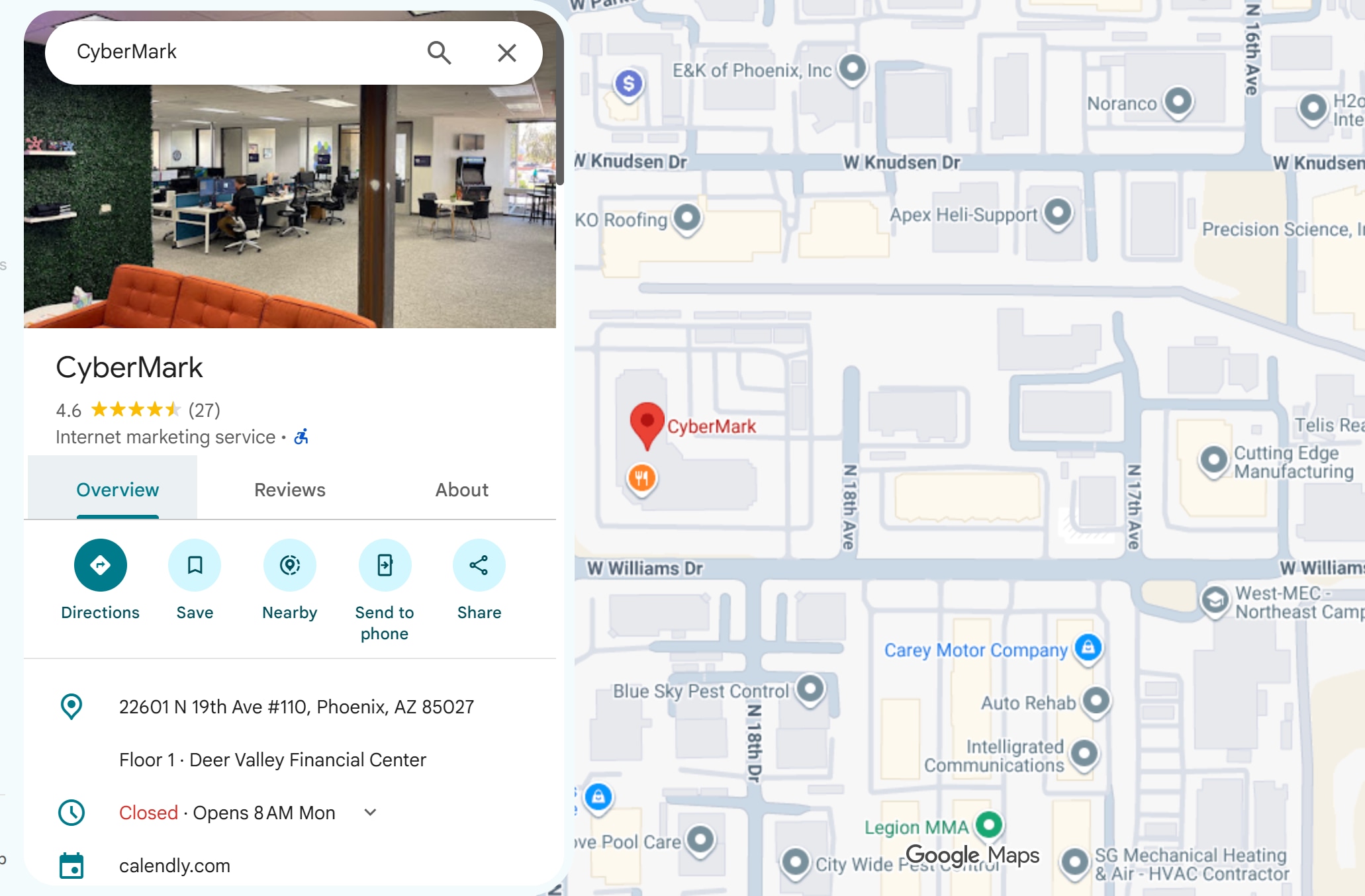
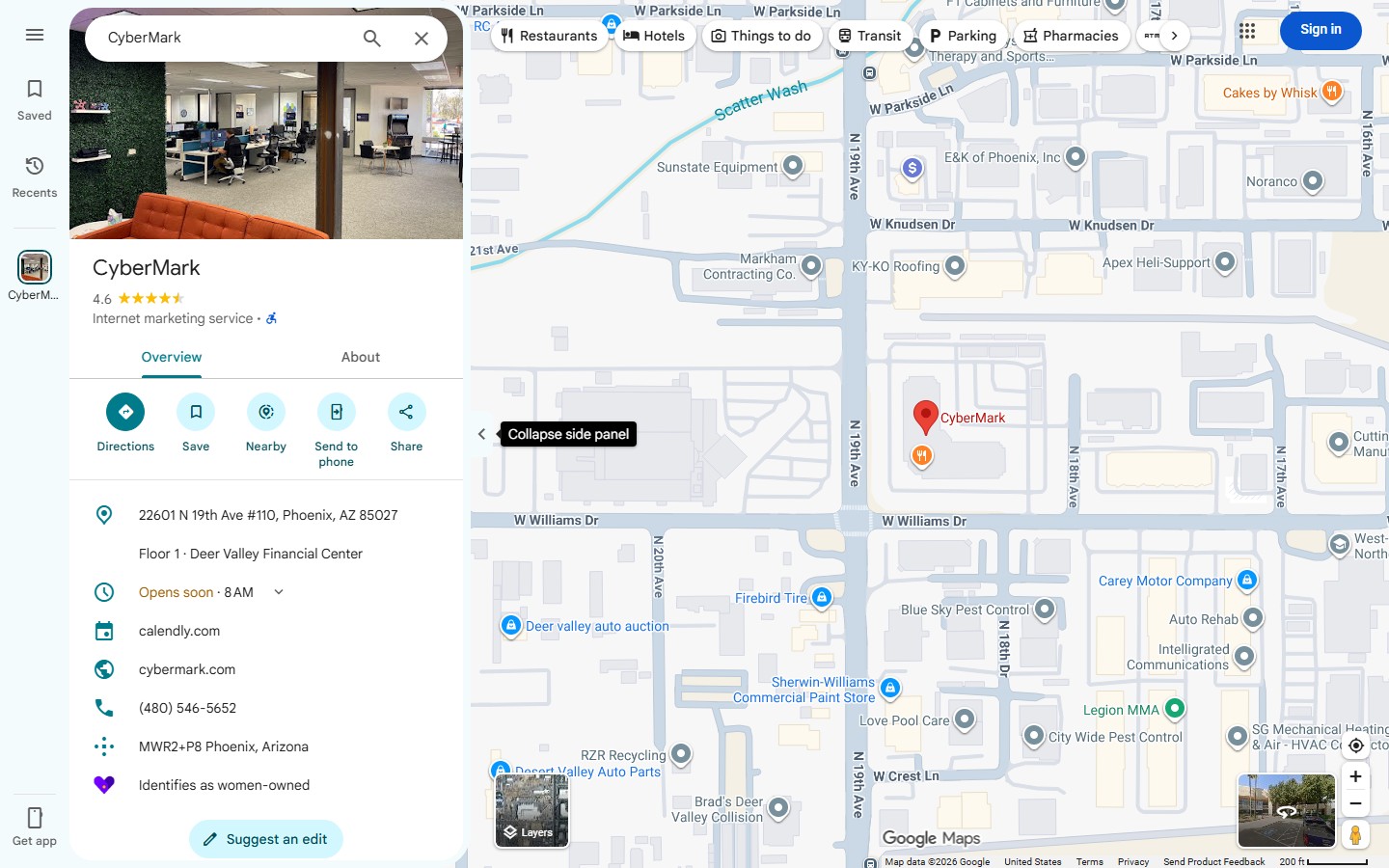
Profile and page. One consistent signal.
Google cross-references your location page against your Google Business Profile. When business name, address, phone, and category align across both, local pack rankings respond. When they diverge, they don't.
NAP consistency
Name, address, and phone must match between the location page, the GBP, and every directory listing. Any drift dilutes local authority.
Category alignment
GBP primary and secondary categories must reinforce the same search intent as on-page service content. CyberMark audits both and resolves conflicts across the network.
Active GBP engagement
Posts, Q&A responses, and photo updates signal an active, trustworthy location. CyberMark manages this at network scale.GBP management details →
Citation coverage
Directory listings extend the NAP signal to 100+ platforms. Missing or inconsistent citations reduce local pack confidence.Citation management →
Numbers from real franchise programs.
14 markets. 18 months. 3.7× organic traffic.
Slick City was opening locations every six weeks. CyberMark built unique local search foundations for each market before the doors opened — content, schema, keyword maps, and GBP optimization in parallel with construction. The case study details every decision and what was measured.
Read the Slick City case studyCyberMark kept pace with us when nobody else could. We were opening locations every six weeks and they had the digital presence ready before the concrete dried.Slick City Action Park
Local SEO works better connected.
Every profile, current and optimized.
Profile completeness, weekly posts, Q&A management, photo strategy, and brand governance across your entire GBP footprint — managed at franchise scale.
Consistent business data where it counts.
NAP accuracy across 100+ directories. Duplicate suppression, new-location submissions, and ongoing drift correction for every location in your network.
Location pages built to rank.
The brandVANTAGE platform provides the technical foundation local SEO depends on — unique location pages, schema markup, and consistent performance at scale.